Why Over-Dependence on a Single Channel Can Be Your Biggest Threat
Your marketing empire built on a single channel is a house of cards waiting for the wind to change. When that inevitable disruption comes and your business survives, or will you become another casualty in the digital graveyard of companies that failed to diversify?
The stark reality facing B2B leaders today isn't just about growth; it's about survival. While your competitors scramble to recover from algorithm changes, platform suspensions and policy shifts, forward-thinking businesses are building resilient, multi-channel foundations that weather any storm.
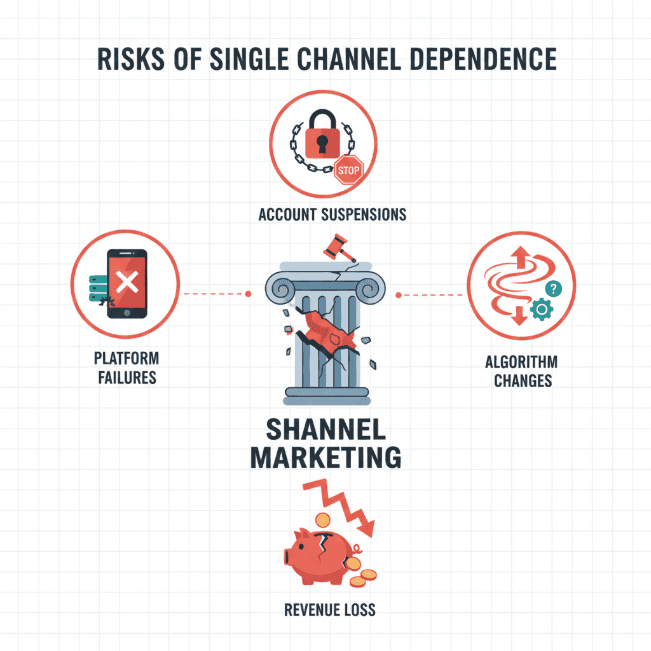
Visual representation of single-channel marketing risks and vulnerabilities
The Devastating Cost of Channel Dependency
The Numbers Don't Lie: Multi-Channel Dominance
The data reveals a chilling truth about single-channel strategies. Multi-channel customers outspend single-channel customers by 300%. More critically, businesses implementing omnichannel strategies retain 89% of their customers, compared to just 33% for those using weaker strategies.
When examining ROI performance, the contrast becomes even more stark. Omnichannel campaigns generate an ROI almost 5 times greater than single-channel campaigns. These aren't marginal improvements, they're paradigm-shifting advantages that separate market leaders from market casualties.
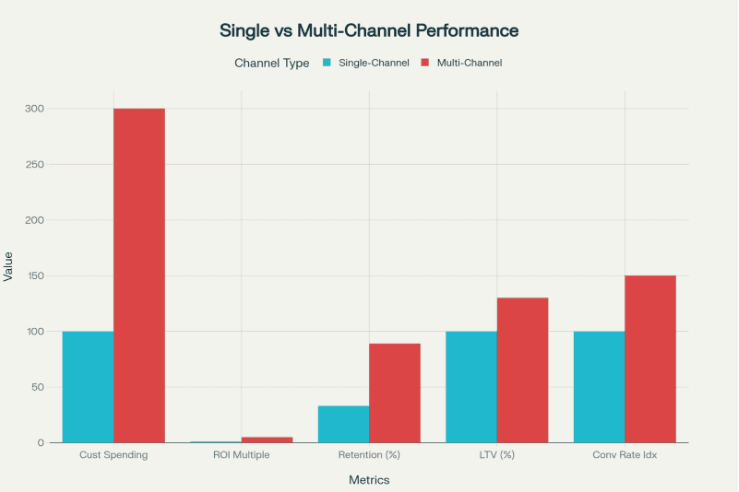
Single-Channel vs Multi-Channel Marketing Performance: The Data Speaks
Real-World Devastation: When Platforms Pull the Plug
The digital landscape is littered with businesses that learned this lesson too late. Consider these sobering examples of platform dependency disasters:
The Apollo App Extinction: When Reddit increased its API pricing in 2023, Apollo, a beloved third-party app, faced monthly costs of $1.7 million. Developer Christian Selig had no choice but to shut down the app entirely, abandoning seven years of work and thousands of loyal users.
PostMyParty's Near-Death Experience: Meta's abrupt shutdown of third-party API access jeopardized seven years of work and over 10,000 customers for PostMyParty. Founder Daniel Burge watched helplessly as his Facebook-dependent business model crumbled overnight.
The TikTok Trap: Countless businesses that invested heavily in TikTok marketing now face existential threats due to potential bans and regulatory changes. Companies that allocated 90% of their marketing budget to this single platform are scrambling for alternatives.
These aren't isolated incidents they're predictable outcomes of a dangerous dependency mindset that prioritizes convenience over control.
The Five Red Flags of Dangerous Dependency
The 70% Vulnerability Threshold
If a single platform drives over 70% of your leads, you're operating in the danger zone. This level of dependency transforms your marketing strategy into a single point of failure. When that channel experiences disruption whether through algorithm changes, policy updates, or outright suspension your lead flow can evaporate overnight.
Budget Concentration Risk
Allocating your marketing budget to one channel may seem efficient, but it's actually a recipe for disaster. When 90% of your monthly budget flows through a single channel, you're essentially betting your company's future on someone else's platform.
The Brand Invisibility Problem
If your audience knows you only within one digital space, you're limiting your reach and long-term growth potential. Brand visibility confined to a single channel creates dangerous blind spots in your market presence.
The Panic Response Indicator
When a slow week on your primary channel triggers internal panic, fire drills, or immediate revenue drops, you've identified a critical vulnerability. Your marketing infrastructure should have layers of support, not a single pillar holding up the entire structure.
The Data Ownership Gap
Relying exclusively on third-party platforms for audience access without building your own customer database is a strategic catastrophe waiting to happen. Ownership of data is crucial for long-term sustainability.
The Platform Risk Reality: What You're Really Facing
Algorithm Apocalypse
Search engines and social platforms constantly refine their algorithms, often leading to significant changes in website traffic, visibility, and ranking. Google's 2024 algorithm updates alone caused unstable SEO rankings with mixed results, lower traffic, and local listing reshuffles.
For businesses dependent on organic reach, these changes can be devastating. Multiple core updates being released in quick succession is becoming the norm, making single-channel strategies increasingly precarious.
The Suspension Sword of Damocles
Platform suspensions happen with alarming frequency and often without warning. Facebook regularly disables advertising accounts due to:
Policy violations (even unintentional ones)
Suspicious or unusual activity
Too many ads rejection
Payment issues
When your account gets suspended, all running ads are paused regardless of performance, you lose access to historical data, and you cannot place new ads. The recovery process is often opaque and lengthy, leaving businesses in marketing limbo.
The Multi-Channel Imperative: Your Strategic Response
The Diversification Dividend
Companies embracing multi-channel strategies are reaping extraordinary rewards. Businesses using cross-channel marketing see up to 89% customer retention, significantly higher than single-channel approaches.
More compelling still, customers who engage across multiple channels shop nearly twice as much as single-channel users and typically spend more money. The compound effect of multi-channel marketing creates a 9.5% increase in annual revenue for companies that master this approach.
Building Your Fortress of Channels
Establish Owned Media Assets
Your most reliable defense is owning the connection to your customers. This means building:
Your own website or app with direct checkout capabilities
Email lists and CRM systems you control completely
Channels where you set the rules, not external platforms
Strategic Platform Distribution
Spread your operations across multiple platforms to reduce concentration risk. Don't rely entirely on one social channel, ad network, or sales marketplace. However, more isn't always better, focus on platforms that align with your audience and growth goals.
Data Integration Excellence
Integrate data from all marketing channels into unified platforms for accurate comparisons and analysis. This provides insights into which channels deliver optimal results and identifies underperforming areas requiring improvement.
Advanced Attribution Modeling
Employ multi-touch attribution models to examine each channel's effect throughout the customer journey. This enables proper credit distribution across touchpoints and strategic marketing optimization.
The Competitive Advantage of Early Action
The 9% Opportunity
Despite overwhelming evidence supporting multi-channel strategies, only 9% of marketers have adopted cross-channel marketing. This presents an extraordinary opportunity for early adopters to gain significant competitive advantages while competitors remain vulnerable to single-channel risks.
Revenue Multiplication Effect
The financial impact of multi-channel adoption is immediate and substantial. Multi-channel shoppers spend 3 times more than single-channel shoppers. Additionally, 50% of multi-channel marketers consistently hit their financial targets.
Your Action Plan: From Vulnerability to Invincibility
Immediate Risk Assessment
Week 1: Dependency Audit
Calculate what percentage of leads each channel generates
Identify budget allocation across all marketing channels
Assess data ownership levels for each platform
Evaluate account suspension risks and recovery plans
Strategic Diversification
Week 2-4: Channel Expansion
Launch test campaigns on 2-3 new channels with small budgets
Begin building owned media assets (email lists, website optimization)
Implement unified analytics across all channels
Establish backup communication channels with customers
Long-Term Resilience Building
Month 2-6: Infrastructure Development
Develop comprehensive multi-touch attribution models
Create integrated customer journey mapping
Build automated cross-channel campaign coordination
Establish regular channel performance audits
The Future-Proof Marketing Organization
The most successful B2B organizations of tomorrow are being built today not on the shifting sands of platform dependency, but on the solid foundation of channel diversification. Companies that implement omnichannel strategies retain 89% of their customers, while those clinging to single-channel approaches watch their market share erode with every algorithm update.
The question isn't whether you can afford to diversify your marketing channels it's whether you can afford not to. Every day you delay diversification is another day your competitors gain ground, another day your business remains vulnerable to forces beyond your control.
Your marketing empire shouldn't depend on the whims of external platforms. Build it on the unshakeable foundation of multi-channel mastery and transform your biggest vulnerability into your most powerful competitive advantage.
The wind of change is coming. Will you be the house of cards that collapses, or the fortress that stands strong?
Act now. Your business survival depends on it.