The New SEO in 2026 - How to Get Found in “Answer Engines,” Not Just Google
In 2026, “SEO” doesn’t just mean ranking on a results page.
It means this:
When someone asks a question, an AI-generated answer shows up first — and your brand either gets referenced inside that answer… or becomes invisible.
This shift is already happening across Google’s AI features (AI Overviews and AI Mode), Bing’s generative search experiences, and citation-first tools like Perplexity. Reuters+3Google for Developers+3blogs.bing.com+3
And it creates a new game:
Traditional SEO = compete for clicks
Answer-engine SEO = compete to become a trusted source the model selects and cites
That’s not just content marketing. That’s trust engineering.
This article is a practical, agency-grade playbook for how to build content that “wins” in answer engines — without falling into gimmicks, spam tactics, or vague “AI SEO” advice.
What changed (and why it matters)
1) Answers now render before clicks
Google explicitly documents how AI features may include and summarize content from websites inside AI experiences. Google for Developers
Bing describes generative search as using models to generate AI layouts and answers that blend sources. blogs.bing.com
Perplexity has built its entire product identity around answers with citations. Perplexity AI
So the user journey increasingly looks like:
“Ask → get answer → maybe click.”
Which means: your content must do two things at once:
Satisfy the user
Be usable by an AI system as a trustworthy source
The new goal: Become “cite-worthy,” not just “rank-worthy”
Answer engines tend to favor content that’s easy to:
understand
verify
extract
attribute
Think of your page like a product.
Your job is to reduce the effort required for an AI system to confidently say:
“This section is the most accurate and well-supported explanation — and I can cite it.”
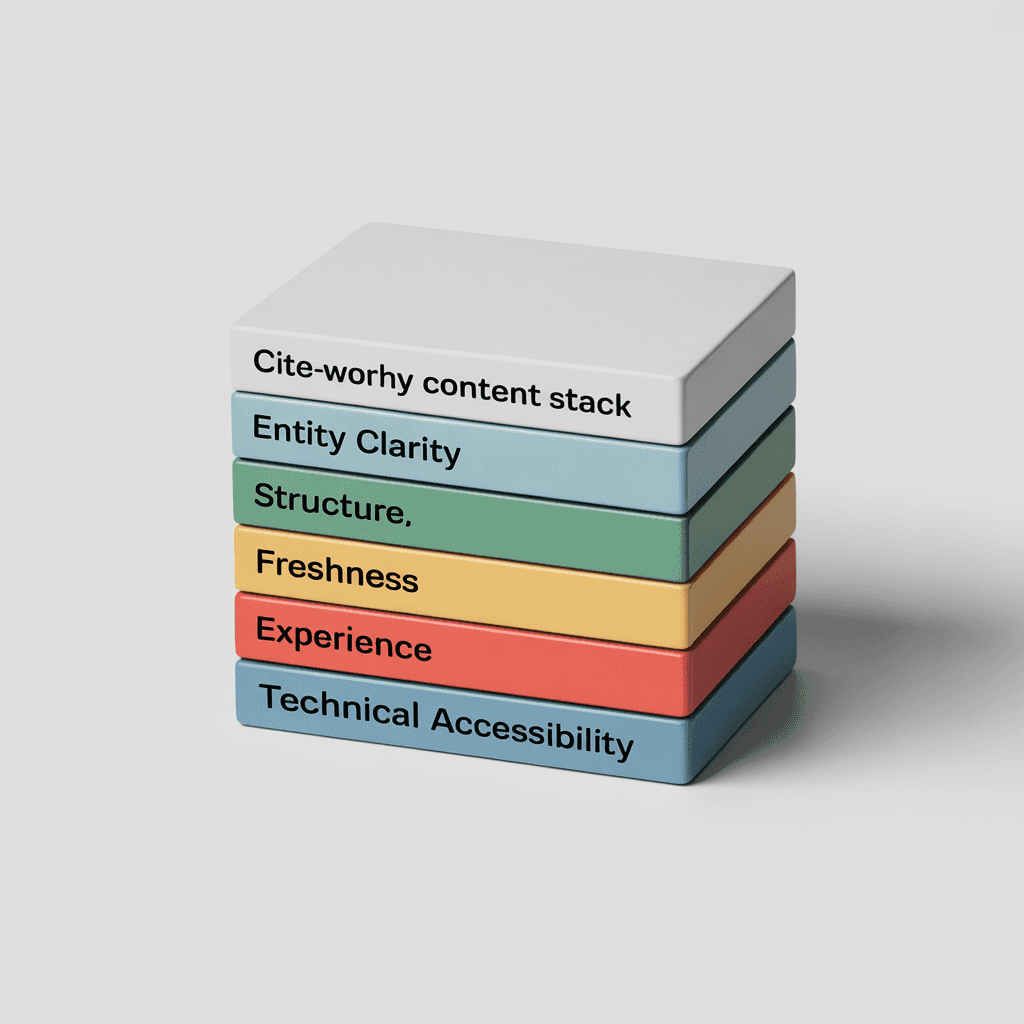
The Marketives 2026 Framework: C.I.T.E.
This is the framework we use to optimize content for answer engines.
C — Clarity of Entities (Who/What is this about?)
I — Information Architecture (Can a model extract the right parts?)
T — Trust Signals (Why should anyone believe this?)
E — Evidence & Experience (Do you show proof + real-world insight?)
Let’s break it down.
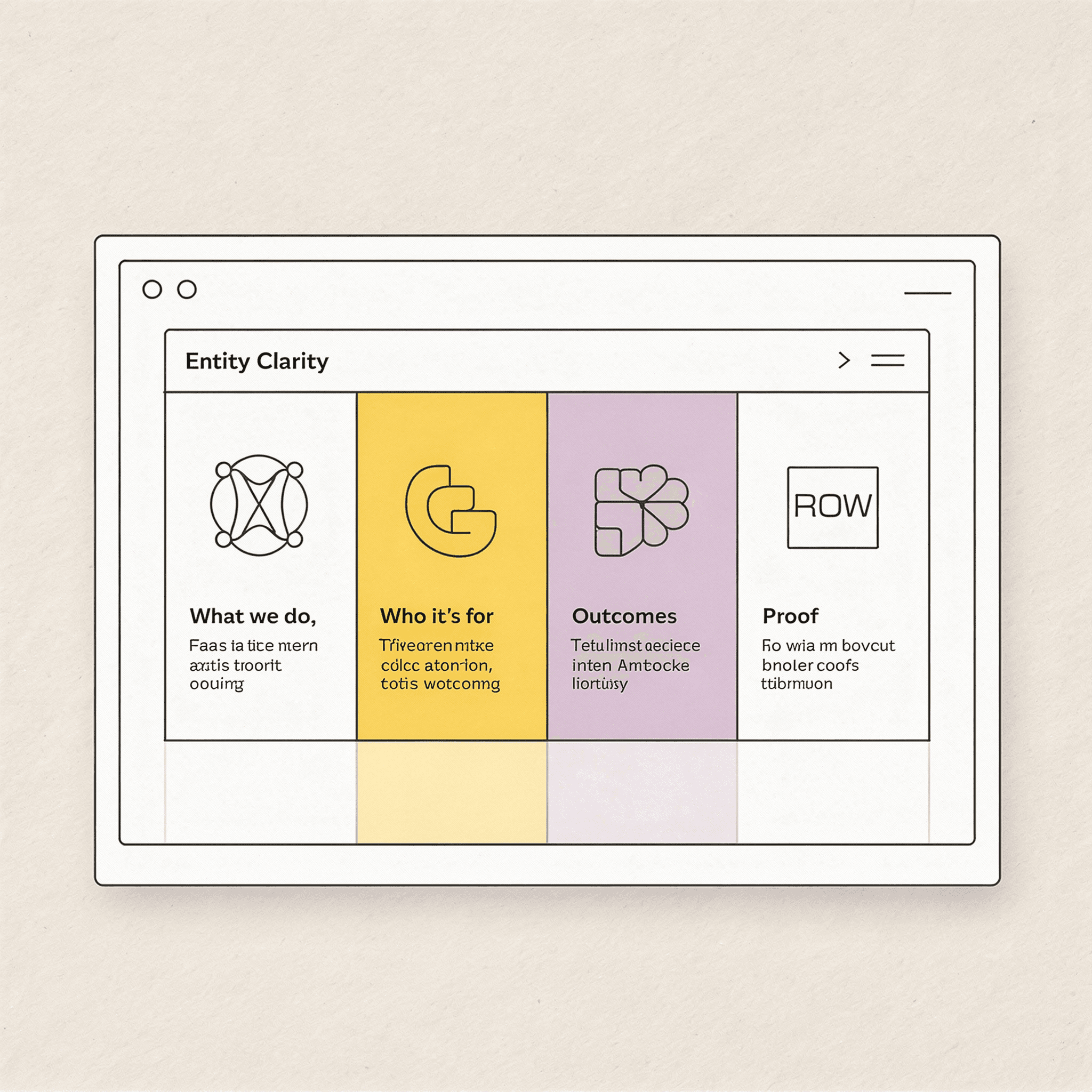
1) Clarity of Entities: Stop being “a vague agency”
Answer engines don’t “feel” your brand. They recognize entities and relationships.
If your website says:
“We help brands grow”
“We do performance marketing”
“We deliver results”
That’s not clarity. That’s fog.
What to do instead
Your content needs to make these things unambiguous:
Who you are (entity)
What you do (services as entities)
Who you do it for (verticals/segments)
Where you operate (geo relevance)
How you do it differently (process as proof)
Practical checklist:
Use a consistent “one-liner” across site: “Marketives is a growth marketing studio helping X achieve Y through Z.”
On each service page, define: what it is, who it’s for, when it’s not appropriate.
Add a “Glossary of Terms” page (seriously). It becomes a citation magnet.
2) Information Architecture: Write like you want to be quoted
Here’s the truth:
AI answers don’t reward “beautiful long-form” the way humans do.
They reward content that is:
well structured
scannable
extractable
unambiguous
The structure that wins in 2026
Use this layout for your highest-value blog posts:
1-paragraph executive answer
“What people get wrong” section
Step-by-step framework
Decision tree / when to use what
Pitfalls and edge cases
Mini checklist
One simple next action
This format is perfect for:
humans
skimmers
AI extraction
It also aligns with structured content best practices Google promotes broadly for eligibility and interpretation (including structured data and quality guidelines). Google for Developers+1
3) Trust Signals: The new SEO is “proof design”
In 2026, trust isn’t a vibe. It’s a stack of signals.
And answer engines are increasingly sensitive to reliability — especially after public scrutiny around incorrect or risky AI summaries. The Guardian
Trust signals that matter now
On-page signals:
Author name + role + credentials
“Last updated” date (real, not fake)
Sources cited (primary sources > random blogs)
Methodology (how you got conclusions)
Constraints and caveats (shows maturity)
Site-wide signals:
Strong About page with real team, location, and positioning
Clear contact details and business identity
Consistent brand footprint across the web
Content signals:
You explain tradeoffs, not just benefits
You include “when not to do this”
You show real examples (even anonymized)
This is why “thought leadership” content is a cheat code in answer engines:
If you’re the page that explains nuances with proof, you become cite-worthy.
4) Evidence & Experience: Stop writing like Wikipedia
A lot of brands think, “If we write neutral definitions, AI will cite us.”
Usually the opposite happens.
Wikipedia-like content is replaceable.
Generic marketing content is invisible.
What wins is experience-based clarity:
mistakes you’ve seen
patterns across clients
what changed recently
what actually works in the real world
Perplexity explicitly emphasizes citations and publisher credit, reinforcing how valuable “source-quality content” is in citation-based answers. Perplexity AI
The easiest way to add experience without revealing clients
Use “scenario proof”:
“In B2B SaaS, we often see…”
“For local services businesses, the highest-converting landing pages usually…”
“When budgets are under €2k/month, the best channel mix tends to be…”
This is what makes your content different and therefore cite-worthy.
5) Structured data: Don’t treat it as optional anymore
Structured data isn’t magic.
But it helps systems understand what your content is and how pieces relate — and both Google and Bing provide guidance on structured data usage and policies. Google for Developers+1
What to prioritize (practical)
Organization / LocalBusiness schema
Article + author
FAQ schema (when it’s genuinely useful)
HowTo schema (for real step-by-step guides)
Breadcrumb schema
Service schema (where appropriate)
And follow policy guidance: schema must reflect what’s actually on the page and comply with content/spam policies. Google for Developers
Reality check: structured data won’t “force” citations.
But it reduces ambiguity — and ambiguity is the enemy of AI selection.
6) Freshness: In answer engines, outdated pages die quietly
Some topics are evergreen.
Many are not.
If your post is about:
pricing
ads platforms
regulations
algorithm changes
“what works now”
Then freshness becomes a credibility signal.
Google has expanded AI search experiences and continues iterating (including AI Mode experiments), which increases volatility and makes “updated, verifiable content” more valuable. Reuters+1
What to do:
Add “Updated on” + meaningful change log bullets
Refresh top pages quarterly
Create “2026 edition” posts that replace older versions cleanly
Avoid rewriting URLs (keep canonical stable)
7) The hidden win: you don’t need clicks to get customers
This is the mindset shift most teams miss.
Answer-engine visibility creates:
brand recall
trust at first contact
pre-sold leads
A buyer might see your brand cited 3 times in different answers, then search your name directly later.
So track:
branded search growth
direct traffic
lead quality and sales cycle speed
—not only CTR.
The 2026 “Answer Engine Ready” Checklist (copy/paste)
Use this to audit any blog before publishing:
Entity + positioning
Clear “what this page solves” in first 2 lines
Who it’s for + when it’s not for
Consistent terms (no synonym chaos)
Structure
Executive summary answer
Framework with steps
Decision guidance (when to choose what)
Pitfalls / edge cases
Checklist at end
Trust
Named author + role
Last updated date
Primary sources cited where relevant
Clear constraints / tradeoffs
Technical
Fast load, mobile clean
Indexable (not blocked)
Structured data where relevant, policy-compliant Google for Developers
A strong example topic for Marketives (to implement this immediately)
If Marketives wants to win answer-engine visibility in 2026, one of the best first targets is:
“Local SEO in Spain for service businesses (2026): a practical playbook.”
Because:
the queries are high intent (“near me”, “best”, “cost”, “reviews”)
people want a clear step-by-step method
many competitors publish vague fluff
That’s where you can dominate with clarity + proof.
One micro-action (do this today)
Pick one high-value service page (e.g., SEO or Performance Marketing) and add a Cite-Worthy Block near the top:
What this is (2 lines)
Who it’s for (bullets)
Expected outcomes (bullets)
How we do it (a simple 5-step process)
Proof (3 short metrics or mini scenarios)
Last updated (date)
This one change alone can materially improve how machines and humans interpret your page.