The Mental Shortcuts Executives Use to Say “Yes” or “No”
In the high-stakes theater of executive decision-making, every "yes" or "no" can transform industries, reshape companies, and redefine futures. Yet behind the confident boardroom presentations and data-driven analyses lies a fascinating psychological reality: the most successful leaders rely heavily on mental shortcuts cognitive heuristics that enable them to navigate complexity with remarkable speed and precision.
For B2B marketers operating at the bottom of the funnel, understanding these executive mental patterns isn't just insightful, it's transformational. When you decide how leaders truly make decisions, you unlock the ability to craft proposals, presentations, and strategies that align seamlessly with their cognitive processes, dramatically increasing your chances of hearing that coveted "yes."
The Executive Mind Under Pressure: Why Mental Shortcuts Rule
The Reality of Executive Decision-Making
Modern executives face an overwhelming barrage of choices daily McKinsey research reveals that companies with agile decision-making processes are 70% more likely to be in the top quartile of financial performance. Yet paradoxically, this pressure to decide quickly forces leaders to rely not on exhaustive analysis, but on refined mental shortcuts that have been honed through years of experience and pattern recognition.
Time as the Ultimate Currency
In the corporate world, time is often of the essence. CEOs are constantly faced with time-sensitive decisions where waiting for exhaustive data analysis could result in missed opportunities or increased risks. This reality transforms mental shortcuts from mere conveniences into essential survival tools for executive effectiveness.
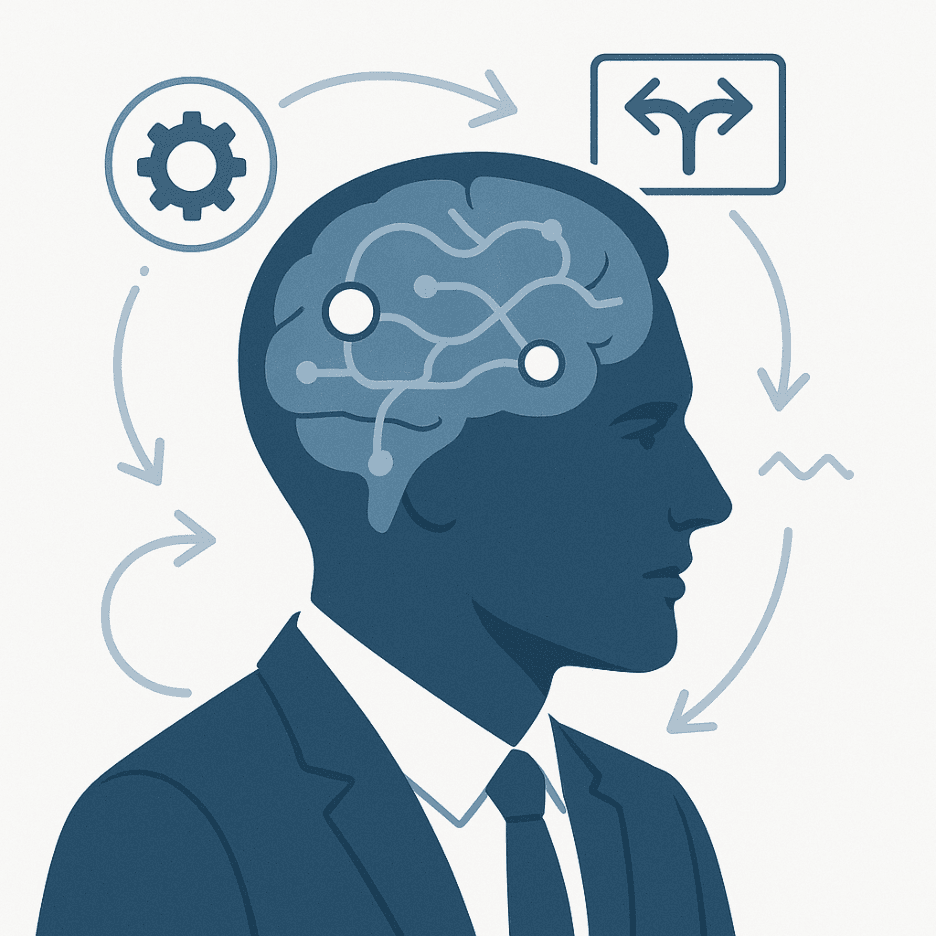
Executive brain showing mental pathways for decision-making shortcuts (Content below image)
The Seven Power Shortcuts: Decoding Executive Decision Patterns
1. Pattern Recognition: The Master Key
Executives excel at rapidly identifying familiar patterns and potential pitfalls, enabling them to make informed choices that balance risk and reward. When presented with a new opportunity, their minds immediately scan for similarities to past successful (or failed) ventures. This pattern-matching happens within seconds and often determines the initial trajectory of their decision.
2. Time Pressure Rules: The Two-Minute Decision Framework
Research shows that if a decision takes less than two minutes, executives make it immediately. For bigger choices, they set strict time limits to avoid analysis paralysis. This creates a powerful opportunity for B2B marketers: structure your proposals to provide clear, immediate answers to their most pressing concerns within the first two minutes of engagement.
3. Social Proof and Authority: The Influence Multiplier
89% of B2B buyers rely on peer testimonials and user reviews as key resources when researching solutions. Executives particularly respond to authority they want to know who else has succeeded with your approach and what results they achieved. This isn't vanity; it's risk mitigation through social validation.
Top Mental Shortcuts Executives Use for Yes/No Decisions
4. Risk Aversion: The Safety-First Instinct
While heuristics may be seen as inherently risky due to their reliance on shortcuts, they actually help executives manage risk effectively by quickly identifying familiar patterns and potential pitfalls. The executive's default question is rarely "What could go right?" but rather "What could go wrong, and how do we prevent it?"
5. First Impressions and Anchoring Bias
The anchoring heuristic causes executives to depend too heavily on the first piece of information they encounter, potentially skewing their judgments thereafter. This means your opening statement, first slide, or initial proposal point carries disproportionate weight in their decision-making process.
6. Experience: The Default Bias
When faced with new challenges, executives instinctively ask: "Did I face something similar in the past, and what did I do then?" This precedent-based thinking often leads to successful actions in situations that closely match past cases. However, it can also create blind spots when leaders assume new situations perfectly mirror previous ones.
7. Gut Instinct: The Experience-Driven Intuition
An executive's intuition is shaped by years of experience and learning it's their brain connecting dots faster than they can consciously process. While they may verify with data, that initial gut reaction often provides the emotional foundation for their eventual rational justification.
The Psychology Behind "Yes" vs "No": What Really Drives Executive Decisions
Emotional Response: The Hidden Driver
Despite the myth of purely rational business decisions, emotional responses account for 35% of executive decision-making. B2B customers actually feel a stronger emotional bond with their vendors than B2C customers do with consumer brands. This emotional connection often determines whether an executive's initial reaction is favorable or resistant.
Strategic Alignment: The North Star Test
Executives consistently apply a strategic alignment filter: Does this opportunity advance our core objectives and long-term vision? This represents 20% of their decision-making psychology and serves as a powerful veto mechanism even attractive proposals that fail this test will likely receive a "no."
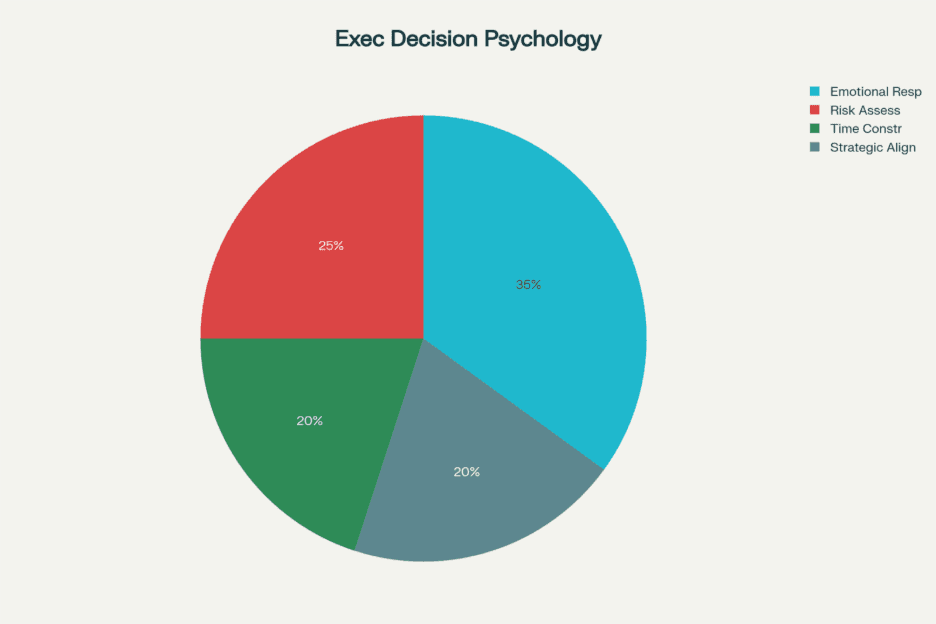
The Psychology Behind Executive Yes vs No Decisions (Content below the image)
Risk Assessment: The Calculated Gamble
25% of executive decision psychology focuses on risk assessment not just evaluating potential downsides but determining whether the risk-reward ratio aligns with their organization's risk tolerance and strategic priorities.
Time Constraints: The Urgency Factor
Time pressure influences 20% of executive decision-making psychology. Executives operating under tight deadlines will favor solutions that can be implemented quickly and show immediate results over more comprehensive but slower alternatives.
Executive at a decision crossroads, weighing yes versus no choices
Strategic Implications for Bottom-Funnel B2B Marketing
Designing for Decision Speed
Understanding that executives make decisions quickly means structuring your presentations and proposals to match their mental shortcuts:
Lead with pattern recognition: Open with clear analogies to successful past implementations
Provide immediate social proof: Include relevant case studies and testimonials upfront
Address risk concerns proactively: Anticipate and defuse their primary risk concerns before they ask
Create clear yes/no moments: Structure proposals with distinct decision points that align with their mental frameworks
The Power of Narrative Alignment
Executives naturally create story arcs with heroes, villains, and challenges to overcome. The most effective B2B marketers position their solutions within these existing narratives rather than trying to create entirely new storylines. When your proposal fits seamlessly into their mental narrative, approval becomes almost inevitable.
Leveraging the 80/20 Principle
Executives instinctively apply the Pareto Principle 80% of outcomes stem from 20% of efforts. Structure your proposals to clearly highlight the 20% of your solution that will deliver 80% of their desired outcomes. This alignment with their natural thinking patterns dramatically increases acceptance rates.
The Decision-Making Revolution: Implications for the Future
Building Executive-Ready Organizations
Understanding executive mental shortcuts enables B2B organizations to design not just better marketing materials, but better solutions. When you know that executives rely heavily on pattern recognition and social proof, you can build these elements into your product development, customer success, and partnership strategies from the ground up.
The Competitive Advantage of Cognitive Alignment
Organizations that master executive psychology gain a profound competitive advantage. They win deals not because their products are necessarily superior, but because their approach aligns perfectly with how executives naturally think, evaluate, and decide.
Conclusion
The most successful B2B marketers don't just sell products they architect experiences that seamlessly align with executive psychology. By understanding and leveraging the mental shortcuts that drive executive decisions, you transform from a vendor hoping for attention into a strategic partner whose proposals feel inevitable. These cognitive patterns aren't weaknesses to exploit, but rather sophisticated decision-making tools refined through decades of leadership experience.
The executives who say "yes" to your proposals aren't just buying solutions—they're investing in approaches that resonate with their deepest decision-making instincts. Master these mental shortcuts, and you'll find that executive approval becomes not a matter of chance, but a predictable outcome of strategic psychological alignment.
In the end, the most powerful question isn't "How can I convince them?" but rather "How can I align with how they already think?" When you answer that question effectively, "yes" becomes the natural, almost inevitable response.